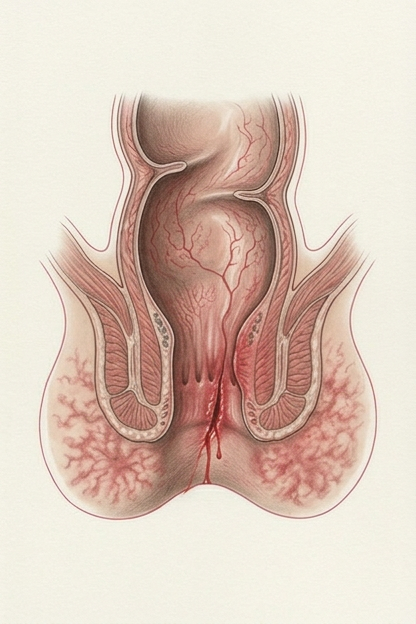
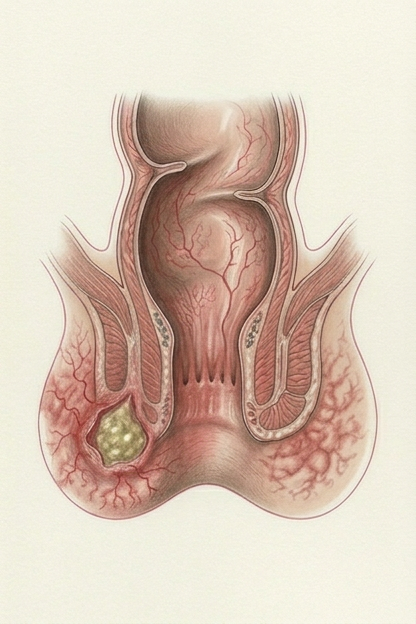
Crohn's anal disease background
Perianal Complications

Crohn's Fistula, Fissure, Abscess
Healing without surgery

Frequent recurrences and wounds that won't heal even after surgery; HanStep's treatment is the answer.

Statistics & Facts

The First Sign of Crohn's Disease,
Anal Lesions

Perianal lesions can be the first sign of Crohn's disease in approximately 17.2% of all patients, appearing more than 6 months before the diagnosis itself. It is reported that fistulas occur in 10-26% of Crohn's patients worldwide, and complex fistulas are harder to treat compared to simple ones, with lower chances of Crohn's disease remission.

Cumulative Incidence of Perianal Disease

Within 1 year
12%
Within 5 years
15%
Within 10 years
21%
Within 20 years
26%

* The prevalence of fistula depends on the disease location: 12% for isolated ileal disease, 15% for ileocolonic disease, 41% for colonic disease, and it is most severe at 92% when the rectum is involved.
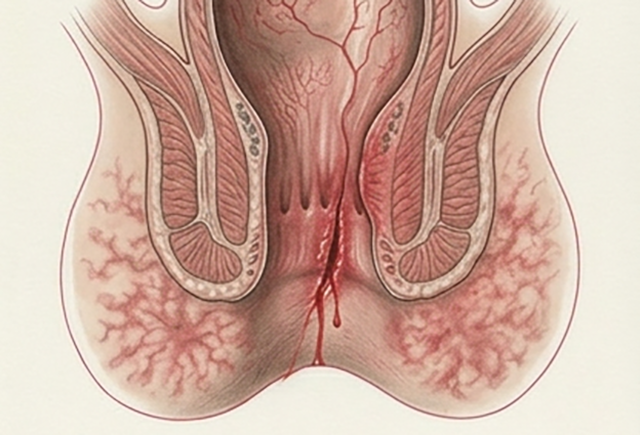
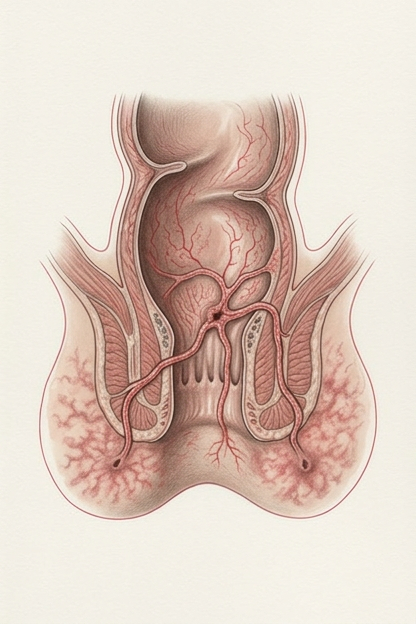
Anal illustration
Risk of Recurrence After Treatment
The probability of recurrence within 18 months after treatment of perianal disease in Crohn's patients reaches 44%.
Major Complications

Major Anal Complications

Crohn's disease causes various complications such as fistula, fissures, and anal abscesses as the mucosa of the rectum and anal canal becomes ulcerated due to chronic inflammation.

Fistula

Fistula (Perianal Fistula)

A condition where an abnormal fistula is formed between the inside of the bowel and the skin around the anorectal area.

Clinical Symptoms
  • Pain, swelling, purulent pus, discharge
  • Abscess formation and repeated infections
  • Skin irritation around the anus and worsening pain
  • Reduced quality of life due to pain and bleeding after bowel movements
Fissure

Fissure (Anal Fissure)

A condition where the mucosa around the anus tears, causing pain and bleeding. In Crohn's patients, it often occurs in atypical locations or becomes chronic.

Clinical Symptoms
  • Severe pain and bleeding during bowel movements
  • When chronic, it is accompanied by skin tags or scar lesions
  • Conservative treatment is highly recommended as a first priority.
Anal Abscess

Anal Abscess

A lesion where pus is locally filled in the soft tissue space around the anus or rectum. It is more frequent than in the general population and carries a very high risk of progressing to an anal fistula.

Clinical Symptoms
  • Severe perianal pain (worsening when sitting or defecating) and tenderness
  • Local swelling, redness, warmth, and difficulty defecating
  • Systemic fever, chills, fatigue, and elevated inflammation markers
  • Immediate drainage is recommended.

"If the wound won't heal after surgery,
you need to change your treatment direction."

It is common for surgical incisions for Crohn's fistulas to fail to heal for months or even years.

Therapeutic Approaches

Limitations of Conventional Treatment and HanStep Solution

Conventional Treatment

  • Medical Treatment (ACG/AGA Guidelines)
    • The use of biological agents such as Infliximab (Remicade, Remsima, etc.) (anti-TNFα) is strongly recommended for induction and maintenance therapy.
    • Combination with antibiotics (Metronidazole, ciprofloxacin, etc.) is sometimes recommended, but efficacy is limited. Despite being commonly used, there is little evidence of its efficacy.
  • Surgical Treatment
    • If an abscess is present, surgical drainage is necessary.
    • Seton placement: Long-term maintenance with a seton string for drainage is recommended. While it prevents early closure of the fistula and prevents recurrence, this method itself is not a fundamental treatment for fistula.
    • Fistulotomy: A procedure that opens the fistula tract, which can be selected when sphincter involvement is low, but there is a risk of incontinence after surgery.

Problems with Crohn's fistula surgery: High recurrence rate, complex fistulas are difficult to treat surgically, and there is a high risk of infection. Complications (delayed wound healing after surgery) and the risk of fecal incontinence occur during recovery. In particular, for Crohn's fistula, fissures, and abscesses, it is very common and a serious problem that the incision 'does not heal' for months to years after removing the inflammation via surgery.

HanStep Korean Medicine Clinic Treatment

Depending on the size of the abscess and the state of the fistula, surgical procedures may be necessary. However, it is common to enter a stagnant phase after abscess incision or seton placement where the wound does not heal for years. In such cases, herbal acupuncture 1-2 times a week can improve the symptoms.

  • Herbal Acupuncture

    Made by refining herbal medicine, it contains no chemical substances and is highly helpful in recovering stagnant wounds and eliminating inflammation.

  • Integrative Approach

    It is especially helpful in cases where surgical procedures have already been performed for fistula, fissure, or abscess but recovery has not occurred. We help our body overcome inflammation and heal the wound on its own.


Treatment duration and prognosis:

  • For fissures, abscesses, and wounds that do not heal, we aim for recovery within 3-6 months.
  • If the fistula is deep or complex, or depending on the patient's condition and lifestyle, a treatment period of 1 year or longer may be required.
Non-Surgical Care

Wounds that won't heal,
with the power of fundamental regeneration

Are you suffering from a stagnation phase after abscess incision or seton placement?
HanStep's treatment awakens stalled tissue regeneration,
helping you return to a comfortable daily life without surgery.

Inquiry AI